
Track by Track



A chat with Midnight Oil
Interview by Andrew Tanner
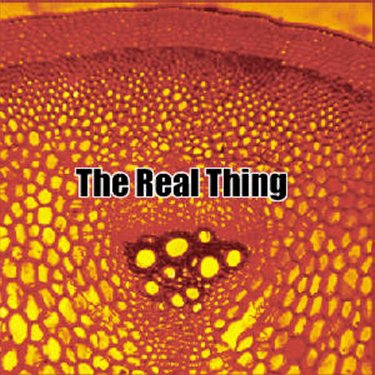 We've had Scream In Blue, we've had 20,000 Watt RSL. Where does the album The Real Thing fit in or add to that summary of Midnight Oil live and collated?
It's the acoustic guitar side of it. And it's the side that started when the whole unplugged thing got really popular, and everybody got dragged into it. And next thing you knew Guns N Roses were doing an unplugged record - it was time to retire the acoustics. But, I think because we'd written on acoustics, particularly albums like Diesel, and 'cause that stuff was sitting there. Some of this material was recorded at the first Unplugged sessions that MTV ever did in New York. Other parts of it come from Ronnie Scott's in London, and the other bits and pieces come from here. That's just a big part of the character of Midnight Oil, and these things had a lot of warmth and a lot of life in them. So, it was time to get them out.
Redneck Wonderland was, I think one of you described it as a pissed off album, and it was very much reacting to the rise of One Nation, and that type of thing. This is obviously a very different album, by definition it's more reflective, and more of a summary. Were you keen to have that kind of album at this time? Or is it just the way it happened?
I think there had been enough time... the Metro shows were in '94, when we recorded four nights, and went to all that effort and did it, and three years later, I think we had the balls to listen to it again, and went, "Oh, ah, it IS good!" I don't think you can record it and then the next day go in and make judgment on it. It's like water under a bridge or something.
We had Chris Abrahams playing piano and organ with us, and a percussionist, and Charlie McMahon played a bit of didge, so it was a bit of a potpourri of sounds and things, it was good. And most of that's ended up on the album. They're not necessarily the most obvious Midnight Oil songs, all of them, you know, obviously there's things like US Forces and Short Memory, and there are also songs like Tin Legs And Tin Mines and things that are a little bit on the periphery for us, so it was actually good to give them a re-working, and get them out.
What do you remember about the Metro performances, I think there's quite a bulk of the songs came from there, in Sydney, what sort of feel was there on the night?
I think it was right after, the tail end of the Earth Sun and Moon world tour, and from there we went to South Africa for the first time, so it was a good change of gear for us to go from the electric to that, and back again. Just sort of keeps you on your toes.
The other gig that features is the MTV Unplugged, was that sort of a good feeling performance for you guys, when you were doing it?
It was fine.
Was it nerve-wracking, was it...
A bit of anxiety before, because we hadn't done anything like that, but the New york Audience were just great, you know, incredibly supportive. The minute we walked out there there was this sort of tangible feeling that the people were there to hear us and they were really, you know, really hard core fans. We's always done a great bunch of shows in New York, you know sometimes the other shows were a bit patchy around the country, but we always did great shows in New York, that was something galvanising about the city. And you know, New York people are outrageously overboard with everything they do, they're not shy people! So I felt pretty comfortable.
We had this great percussionist keeping me in time as well, who played with Whitney Houston, a really great guy. A didgeridoo player called Adam... Plank? Plack. Yeah, just scooped off the street, he was out there busking and found himself on MTV Unplugged.
And wouldn't get off!
and Chris Abrahams, you know, doing that great thing that he does, when he plays with the Oils.
Moving on to the new tracks, can you just give us a bit of background on who you worked with to produce them?
We recorded in Festival with Paul McKercher, most of the material except for Say Your Prayers which we did with Daniel Denholm - that went on Liberdade, the East Timor benefit record - and then mixed most of the tracks up at Albert Studio in Neutral Bay with Paul, except for Real Thing which Jim and Magoo came back and mixed at 301.
I'm wondering, in terms of those new songs in particular, how the group creative process has changed, if at all, over the years? Do songs come together in different ways now? Or is it exactly the same as they always have?
We don't really have a formulaic enough way of making music any more, I think. I mean, we all write in combination or individually, and there's no formula for it, and whatever's the best stuff we've got at the time ends up being the record. Actually, it hasn't changed at all.
Is there much blood on the floor when you're recording these songs? And lots of arguments? Is there a conflicting process to get the thing done? Or is it pretty smooth instead?
No, I don't think there is much blood on the floor, actually. You'll always go through stages where people have got different views about what does and doesn't constitute a Midnight Oil song. Once we're in agreement that we're going to record it, then that process actually becomes pretty easy. And I think these sessions were some of the best, certainly the quickest, that we've done for a long, long time. Actually quite refreshing. So, yeah, I don't know... It seemed to work.
You're about to go out on tour again, with, I believe there's a big acoustic set, sort of at the heart of that. Some of the more unkind critics of the band might see it as the guys kind of sitting back and taking it a bit easier these days, how do you respond to that?
We don't respond to critics at all, kind or unkind. (laughter)
We're not sitting down, we're going to stand up.
And so will the audience I guess. I mean, we've always mixed and matched you know, like the last time we went out we were in the pubs with Redneck Wonderland, and it was a very hard, very in your face, very modern sounding record for this band to make. And a whole new audience came along and it was reasonably intense down there. But if we were to just turn around and do that again, then they and us would probably lose interest. And this material really suits itself to be played in kind of different arenas, so that's why we're doing theatres. So it'll be aurally I think very very expressive and a very fluid way that the music works. But there'll still be a lot of that, I mean there's always edge when we play you know, if there's no edge then we wouldn't play.
It might be acoustic, but it's gonna be stand up, raucous acoustic, not sit down, armchair, cruisy acoustic.
Is it? (laughter, snoring)
Is anybody awake?
Is there a sense in which this album, those songs that are chosen, and I assume the songs that are going to be performed live, there's a sense that you want people to, it's like the less-discovered songs in the back catalogue, you want to bring them to the fore again and say have another look at these, check 'em out, they're good stuff.
The good thing about the acoustic thing, I mean it did get really overworked, in the Unplugged mode and everyone, his cat and his dog was doing an unplugged album a few years back, but I think for us it's, this whole thing's a discovery. It really brings the songs forward, for us, it really does work in that way. And um, the last tour we did, which was Redneck Wonderland was very electronic and very electric and loud and harsh, wheras the idea with this one is to sort of just do them a little softer which is in our nature, we're a very contrary bunch of...
You can say it.
Difficult bastards!
Do you have a sense of tension with the audience, where you have to try to separate yourself from the great, unwieldy, loud lumbering beast that is Midnight Oil live and electirc and say, hey, this is about the songs? You know what I mean? Like, separate yourself from what people often respond to?
For me, you know, being on the front line with this audience I think that there's sort of a point you reach where you've actually got to suspend what's going on with the audience and just lock on to what's happening on stage with the band. And I think that's maybe one of the strengths of the band is that we're actually able to do that. You know that people want to hear things a certain way, they want to see the Oils go off, they want it to be the way that they remembered it last time, or the way that the song worked for them when they first heard it. But we actually have to find a way of making it work as well, which is just as important. Maybe it's even more important. So even though we love 'em out there, we're actually playing it for ourselves when we're on stage.
What about the future? Do you consider where is Midnight Oil going after the tour?
[singing] The future's uncertain about the end is very, very near. Let's roll, baby, roll. [end singing, others laughing] We just roll, you know, from one thing to another. And if it's still rolling, then we're still there. And I think we've long -- well, I'VE long since given up trying to figure out the mysteries and magic behind how Midnight Oil continues to do what it does. I think it's best not to talk about it, really [laughing].
OK, I don't want to drag you back into the past...
Good!
...but you are one of sort of the last of the Oz rockers from the glory years of the 70s, apart from maybe AC/DC there's not many more I can think of that are still around. Do you ever feel like, I mean people talk of you as elder statesmen of Oz rock, do you ever feel like that, does it mean anything to you?
Well I've done a lot of work with young bands, and the sort of thing they say to me is 'Jim! Tell us a rock story!' And you go 'No! No, I've already told you ten! Shut up!'
Shut up and play your guitar!
You do get the elder statesman thing, it's a bit of a... It's kind of nice in a way, but..
'Do you, like, steal the Kit Kats out of your mini-bar? Yeah!'
Yeah... I mean I think you also reach a point where you... you're doing new things and you're writing new music, but you have this great backlog of material, and you have to acknowldege it. You can't just keep on playing new songs on tour and say oh well, bugger the audience we'll just do whatever we want. You have to not only do it for them, but you have to do it for yourself too I think, to a certain extent. Without becoming nostalgic or retrospective, you've got to give it a bit of respect and nod towards it sometimes. 'Cos it does mean a lot to you and to other people, and the more you do it the more you have to, the more songs you write the more you have to acknowledge it I think, and not get pulled back into into it, look forward but also take a long look at them and re-invent them as you go, and that's what I think we tried to do on this record with the acoustic songs.
Maybe an obvious question, do you actually play different, I'm interested in Rob with your drumming or Martin with your guitar playing, do you play differently for that kind of show? Or is it essentially the same energy translated into an acoustic instrument?
Yeah I found when we first started you were just trying to get so much energy into the acoustic guitar that for the first few times we were just breaking strings, every song, snap. And it took quite a while to just bring it down to that level, where you could get the same emotion out of the acoustic guitar. It's still a challenge, especially when you're trying to play single string lines, when you're not just strumming all night. It was OK by the end.
It was.
And if anyone said the word "Fairstar", the song would be dropped. It means that we'd gone the wrong way, means that we'd gone onto kind of you know...
Club Oil.
...Fairstar mode. That was always...
Fortunately the Fairstar's been dropped too.
...too clubby.
That's the album. Unless there's aything else that you think we should hear, about the album?
I think one of the things about this record that makes it the Real Thing is that it's us really playing. With our real audiences. I don't think there's any overdubs or certainly very few, we didn't go back and fix much, we fixed maybe a few little bits and pieces here and there but we left it pretty much as it was done. So it is in that kind of part of this band's character to be itself, and be open and quite raw and quite bare. The Real Thing is that kind of record. It's not laid-back even though it's got these elements of acoustic in it. It's still very very present and immediate.
Track By Track
The Real Thing's the first song on the album, I'm wondering where you were when you fist heard the original?
I think I was scraping the shit out of my Uncle Ronnie's pigeon coop. At about the ripe old age of eleven I think or something. All very psychdelic and weird, certainly very un-Engelbert, which I was used to hearing.
I think I was at boarding school, and I was listening to the Small Faces and the Who late at night, surreptitiously under my pillow, in bed with blankets buried over my head, I think I heard it then.
It was a single wasn't it? And the b-side of the single was Just The End.
Yeah.
Is that how it was?
Originally, I think that's right.
I think I just used to listen to the b-side over and over again.
That was the one with all those Nazi rallies and stuff was it?
It was one of the first singles I ever bought, I'm sure of it actually. There's something just about the sound of the original version that's this terrific, terrific recording. It's very rough and very, you hear all the edits and drop-ins and punch-ins from the recording and it's just, the way he sings it is so detached and psychedelic and creamy, as a fifteen year old I just thought 'Oh my God!', and the fact that it was Australian, recorded here and written here, was even better, and even still today... One thing in our version, we were a little bit scared of the original because it was such a good original. And I think we... who was it played the piano and organ on the original was it Brian Cann or someone? It's just incredible. So we tried to, not bulldoze our way through it, but we tried to respect some of the good ideas that were on the original.
I heard it and I realised there was more in the world going on than white bread and Mosman had to offer... (laughter) I sensed from the song that people had other experiences, and I felt like I was missing out, you know.
OK, the second track is Say Your Prayers, I noticed also that sonically on that song it seems that each time you record the guitars are getting grungier, sort of dirtier and messier.
Yeah, my only worry was that the band might be a bit heavy handed with it but I actually think that we got a really good band version while still keeping the lopey, groovy thing which was the essence of the song. And it's twice as loud, you know, it's like... that thing's so fucking loud, it's great.
Third song is Spirit Of The Age. Interesting bit of Oz spirituality or spiritual wisdom, if I've heard it right, 'Karma is a boomerang'?
Oh yeah, OK.
Is that a bit of threat and a bit of promise in the same lyrics?
I guess it's just... we're just always picking up, I think, constantly on that repeated theme that came from Donald Hall and 'Lucky Country',and 'Lucky Country' was misinterpreted, that title was misinterpreted and we still sit here with all this good stuff going for us, and in many ways doing good things, but also making a hash of it... Ah, that's what it is, that's what it's about I guess. I don't know.
Well it's, yeah, the mean spirited thing that's been going on in a lot of... the political area for a few years now in Australia. The song really deals with that I think and 'Yeah I know the spirit of the age is coming home', the spirit of the age is putting the thumbscrews on a lot of the good stuff.
OK, and then we head into some of the back catalogue there, first up is Feeding Frenzy, which of course is from Earth and Sun and Moon, very Booker T. style going on the organ, is that you Jim?
Yeah
It's as close as the Oils get to classic R&B I've made a note here... (laughter) Do you agree?
Yeah
Yeah I think that's right. Well with Jim and Chris Abrahams both in there, and the thing set up on a very strong groove, and actually, the rhythm of it, it really swings, this version, of Feeding Frenzy, and then of course once you've settled everbody just gets... you know, everyone's a cat for a while and away it goes, you know, off into the distance.
We try and be funky with it.
It's about as close as we come.
We did a pretty good job of it.
I noticed, in listening through, there's lots of peaks of audience applause going on in through this song. I was wondering if you remember why they were clapping, or what they were clapping about?
[laughing] That's because we started that bunch of Metro Sydney shows with that song. And it started with Martin and Jim, you know, at the front playing the intro on acoustics, and then one by one the rest of us would sort of, just drift on as if we were just passing through. [laughing] Like, "Oh, the band's on tonight! Great!" So people are acknowledging there's other members of the Oils turning up late.
Dead Heart's the next one, obviously one of the definitive songs in the Oils canon, I always thought listening to that song that it's as much geography as it is politics, in my ears it actually sounds like the desert, and this version also features some great sort of barking didgeridoo from Charlie McMahon.
That's right, it's really evocative, it's got a lot of the geography and the sound of the desert, and that space built into it, just the rhythms of it, and with Charlie in it as well, just giving his log so much stick (laughter) meant that...
Very good!
...meant that it had... yeah, it's got a ton of flavour.
The next song up is Tin Legs And Tin Mines which... there's even more pathos in the acoustic version to my ears. It's one of those songs where you really think, oh that really has brought out another kind of dimension in that song.
Some songs, and Tin Legs would be one of them, I think maybe most of them, but certainly Tin Legs is one of them, where if you don't do it that often, when you come to it you're actually thinking, oh, OK, here are the words, oh this is why this song was written, oh, this is what we were felling at the time, instead of in a sense just performing the song. There's a couple on this record that are like that. They're very very immediate, and quite tangible and quite close emotionally to what the original intent of the song was.
Next up, Short Memory, a famous song from the 10,9... again it features some great piano playing.
Yeah, Chris is doing like his 'Flight of the Bumblebees' with his little fat stumpy hands (laughter) and short fingers, he's incredible to watch!
I think it's 'Flight of the Refugees' in his case...
And then when you actually look at the face on the guy it's like he's just at home watching a video, but his hands...
It sounds like he's running pair of barbells up and down the keyboard.
The other thing though is that Short Memory's got a really good musical architecture, it sort of doesn't really matter what it's played on it just, it'll stand there, and that riff, you're right, it sort of glues it, but it also propels it. And it's always been a good song to do, and it didn't get tired, I mean we played it for years and we just never got tired of it, you know, and the audience, it's something, it's an audience favourite if you like, but it wasn't a song that got stale, which kind of really interested me. And when you listen to the lyric, you know, you could sort of imagine just substitute, unfortunately, regrettably maybe, substitute another half a dozen names and you have the same song, it's fairly timeless as well I think.
Next up's In The Valley. Peter, one of the more personal lyrics in the Oil catalogue. And a very un-Oils kind of song, in some ways. It's almost like gospel-based in some - you know, all the chords and everything.
There was a... I think it was Bones's suggestion, actually, when we went to do it as an unplugged thing, just... His suggestion was just do it with a piano, and just do it really close, the vocal, very personal, and that's been... The first time we actually played it was that recording.
That's right.
The very first time we played it in New York. And the chill over the audience, the actual audience was just totally on their toes on it.
It's one of those songs.
We never actually got that again, either, when we toured it.
No, that's right.
'Cause it just had that first take quality to it. There's a great moment at the end of the recording when there's just a complete pause for about five seconds. And they're just thinking, "What was that I heard?" And then they just... sort of exploded.
At the time I wasn't so happy that we were actually recording it, because I actually thought it was almost too precious to record. But I'm glad that we did.
Actually...
And we've got it here.
Blue Sky Mine after that, some pretty good harp playing going on there Peter, how long have you been playing? When did you start?
I actually don't know where it started.
No Reaction
Yeah, it starts on No Reaction, I'm not quite sure why I picked it up, I think I was just at a bit of a loose end. I think when the band was playing and writing songs, particularly when I first came along, they might play a session, and they might play and jam on something for fifteen, twenty minutes and then, you know, they'd come back to a verse. So, you've got to do something with your hands, you know... (laughter)
A cup of tea...
And I was very lucky that we had a guy who was, who came out and worked with us, who taught me sort of, you know, the Moron's Guide to Harp Playing, which once I'd sort of got on top of, you can sort of fit with just about anything.
Who was that?
Peter Edwards.
Oh, right.
Suck, blow, suck, blow, blow, blow, suck, blow, suck and that was it you know. (laughter)
Sounds like a tour of Amsterdam to me! (laughter)
US Forces, again, one of the Oils classics. Who came up with those strange, beautiful opening chords?
I think a lot of it was to do with 'cos we were just dealing with acoustic instruments and we've always done it really, but we've always given it a bit of a twist, never been too precious or po-faced about it, we've always thought okay that sounds good but we can make it sound... we can distort it or we can really mess it up in a good way, let's do it, and that's probably what we started doing about the US Forces time, sounds - pianos and piano strings, and dobros, and open tunings and new tunings, we were sort of dabbling in it. and it's good to put on a record because the audience really sings along well and it's just... I think it's a good one.
Warakurna's up next which is one of the great songs off Diesel And Dust, and so it's a fantastic version, this one, again, it's ghostly almost.
It's from MTV in New York, that one, if I'm correct. Yeah it was kind of, I remember, it was pretty hair-raising when we did it. We got to the end of it and it was all very exciting, you know, sometimes you... this amazing passion, you can feel it.
It was the encore wasn't it?
I can't remember if it was the encore or not.
Yeah I think we played the set, and then we went out and just calmed down for a moment and then we walked back out and played that, so everybody just took a deep breath... When you're doing this whole acoustic, what used to be called Unplugged but now we're calling it something else, you've really got to get the vocals right, and I think in that the vocals are fantastic. It just took, we rehearsed for about six or seven or even eight weeks, just solely every day, just doing all that and you can really hear that particular performance is just totally... Just the dynamic of it - it starts very very quietly, almost tentatively, and just builds it's way right up.
Truganini is the next song, I'm wondering after hearing that lyric "I hear much support for the monarchy" whether you have any reflections back on the rest of it.
Nothing's changed, has it?
Song's like that are obviously very much heart on sleeve, do you ever feel a desperation when you're playing these songs, it's the same issue five years later.
The last track on the album is a new song, Last of the Diggers. It's almost a strain of melancholy I detected through the song.
It seeps in and out now and then, I think, the melancholy. There is some of it on this, it's, I don't know, so much nostalgic as kind of, an awareness of this period, this passing of history.
It's a very strong piece of music as well. I mean, the way it's written and, it just fit us like a glove. As soon as we played it... I don't even think... We played it once in the studio and we got it. It's just one of those, you know, good, fortuitous events, really, and uh, those sort of songs really fit the band well. I mean, really, really [snaps fingers] bang, and off, and you've got it straight away.